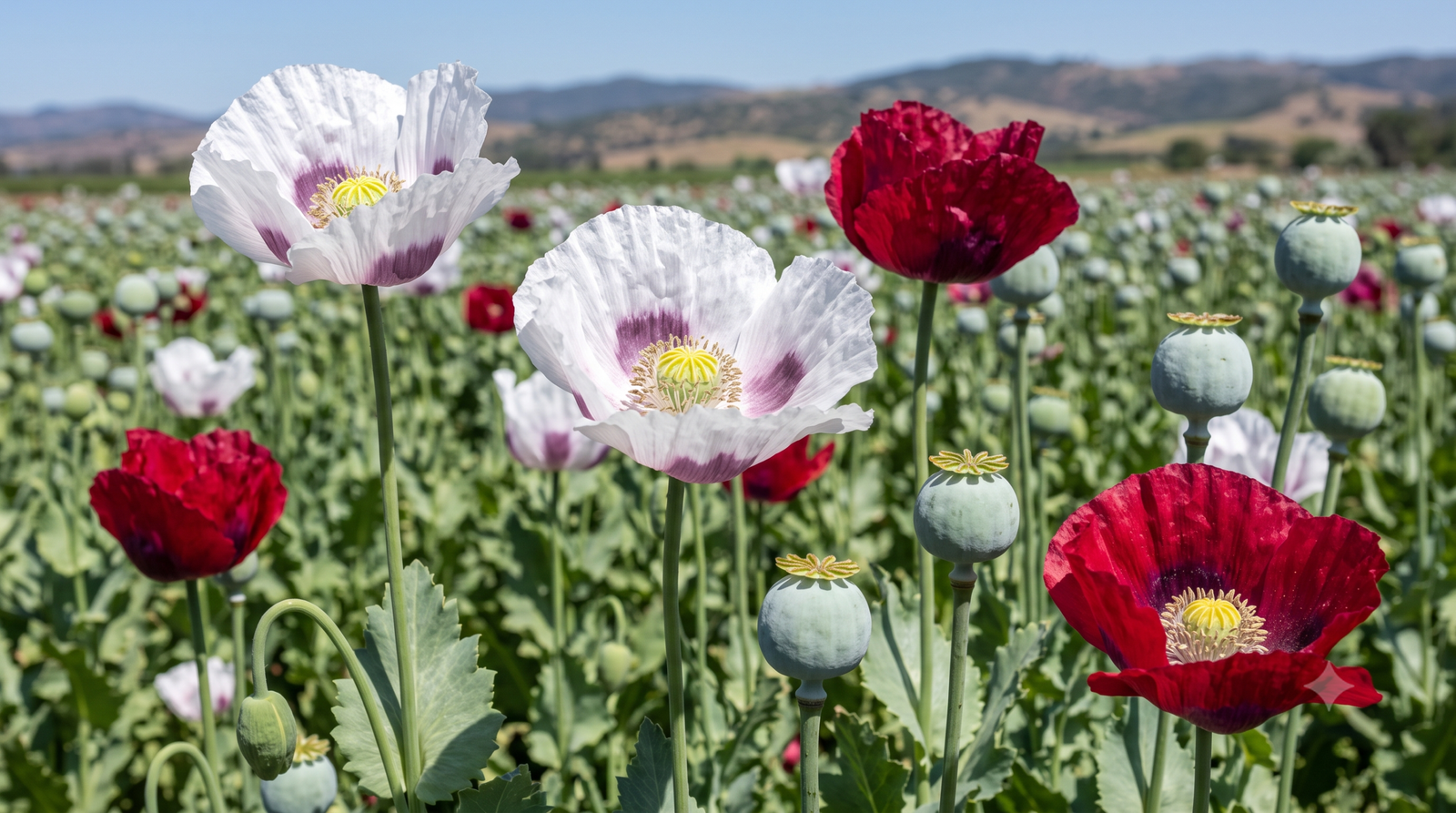
Papaver somniferum
Papaver somniferum
Active principal: Opium contains two main groups of alkaloids, phenanthrenes such as morphine, codeine and and thebaine are the main narcotic constituents. Isoquinolines such as papaverine and noscapine have no significant central nervous system effects, and are not regulated under the controlled substances act. Morphine is the most prevalent and important alkaloid in opium, consisting of 10-16% of the total, and is responsible for most of its harmful effects such as lung edema collapse, respiratory difficulties, coma or cardiac or respiratory collapse. Morphine binds to and activates mu-opioid receptor in the brain, spinal cord, stomach and intestine regular use can lead to drug tolerance or physical dependence. Chronic opium addicts in 1906 China 47 or modern day Iran 108 consumed an average of 8 grams of opium daily.
Morphine is the primary biologically active chemical constituent of opium.
Uses:
i) The plant pacifies the vitiated vata and pitta in the body.
ii) It helps in reliving pain.
iii) The plant is quite effective in the treatment of diarrhoea.
iv) Disease like colic, insanity can be cured with the help of poppy.
v) It shows very effective result in the treatment of premature ejaculation.
vi) Muscle spasm is known to be treated with the help of poppy.
vii) In excess, does it acts as a narcotic.
Through, poppy have some medicinal uses but apart from that poppy or opium is considered to be dangerous for health is least recommended opium smoke may cause cancer and is suspected of causing esophageal and bladder cancer.
Moreover, a pregnant women using opium can give birth to have infant having dependence with opium. Thus, opium or poppy has many harmful effects on health and hence is least recommended.