Purulia Chhau Dance: History, Masks, Culture and Heritage of West Bengal
Purulia Chhau: A Spectacular Folk Dance Tradition of West Bengal
Purulia Chhau is one of the most vibrant and visually spectacular folk dance traditions of India. Originating in the Purulia district of West Bengal, this unique dance form is famous for its colorful masks, energetic movements, elaborate costumes, and dramatic storytelling. Combining elements of dance, martial arts, music, mythology, and folk culture, Purulia Chhau represents the rich artistic heritage of eastern India.
The dance is an important part of the cultural identity of the people of Purulia and continues to attract audiences from across India and around the world. With dancers wearing magnificent masks and costumes while performing powerful movements to the rhythm of traditional drums, Purulia Chhau creates a truly unforgettable visual experience.
Origin and History of Purulia Chhau
Purulia Chhau developed in the Purulia region of West Bengal and has deep roots in the folk traditions and martial culture of the area. The word “Chhau” is believed to have different possible origins, with some scholars connecting it to words associated with disguise, masks, or shadows.
The dance developed as a form of entertainment and storytelling among rural communities. Over time, it became closely connected with religious festivals, seasonal celebrations, and village traditions. The performers used dance and dramatic movements to present stories from Indian mythology and traditional folklore.
Purulia Chhau is generally considered a dance form that combines martial movements with artistic expression. Many of its movements resemble fighting techniques, animal movements, and physical exercises. This combination gives the dance its powerful and energetic character.
The Importance of Masks
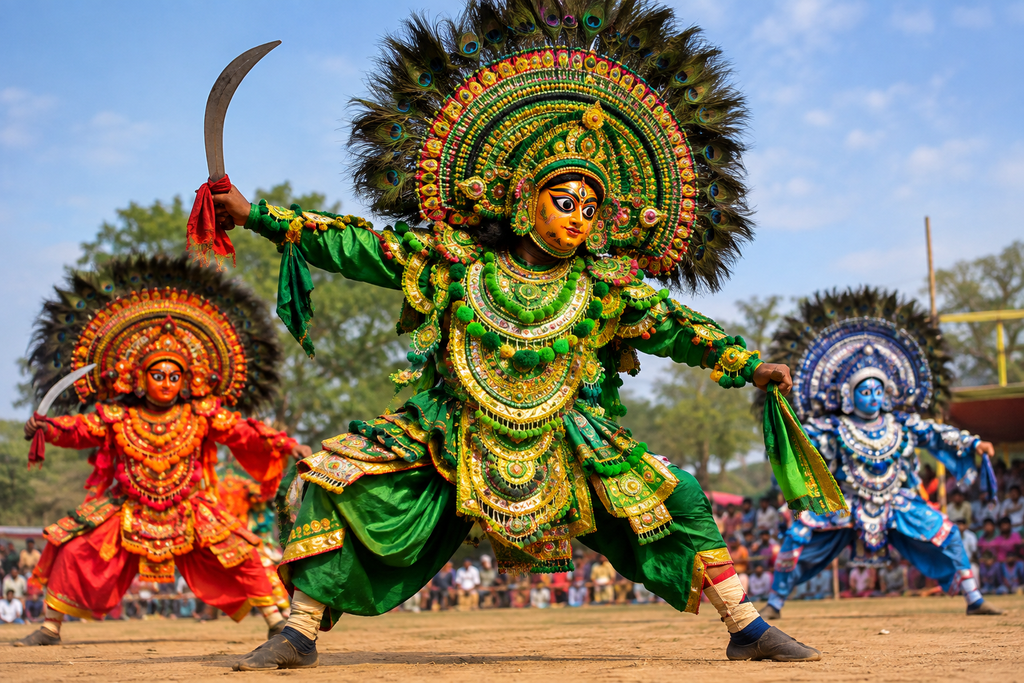
One of the most distinctive features of Purulia Chhau is the use of large and colorful masks. These masks represent gods, goddesses, demons, animals, mythological heroes, and other characters.
The masks are carefully designed and decorated by skilled artisans. They are usually made using traditional techniques and are painted in bright colors. Decorative materials such as feathers, beads, foil, cloth, and other ornaments are often used to make the masks more attractive.
The village of Charida, located near Baghmundi in Purulia, is particularly famous for the traditional art of Chhau mask-making. The artisans of Charida have preserved this craft for generations and play an important role in maintaining the cultural tradition of Purulia Chhau.
The masks are not simply decorative objects. They help transform the dancers into different characters and bring mythological stories to life on stage.
Themes and Stories
Purulia Chhau performances often present stories from Indian mythology and traditional literature. Popular themes include episodes from the Ramayana, Mahabharata, and various Hindu mythological stories.
Characters commonly portrayed in Chhau performances include:
- Lord Rama
- Sita
- Ravana
- Lord Krishna
- Arjuna
- Bhima
- Goddess Durga
- Lord Shiva
- Goddess Kali
- Ganesha
- Mahishasura
- Various demons and mythological creatures
Apart from religious and mythological stories, Purulia Chhau also presents themes inspired by nature and everyday life. Dancers may imitate the movements of animals, birds, and other natural elements.
Dance Movements and Style
Purulia Chhau is known for its energetic and physically demanding movements. The dancers perform powerful jumps, spins, leaps, and dramatic gestures. Because the performers wear masks, they cannot use facial expressions to communicate emotions.
Instead, emotions and actions are expressed through:
- Body movements
- Hand gestures
- Head movements
- Posture
- Jumps and leaps
- Rhythmic footwork
The dance requires strength, flexibility, balance, and extensive practice. Many movements are inspired by traditional martial arts and physical training.
The absence of facial expressions makes body language especially important. A skilled Chhau dancer must communicate the personality and emotions of a character entirely through movement.
Costumes of Purulia Chhau
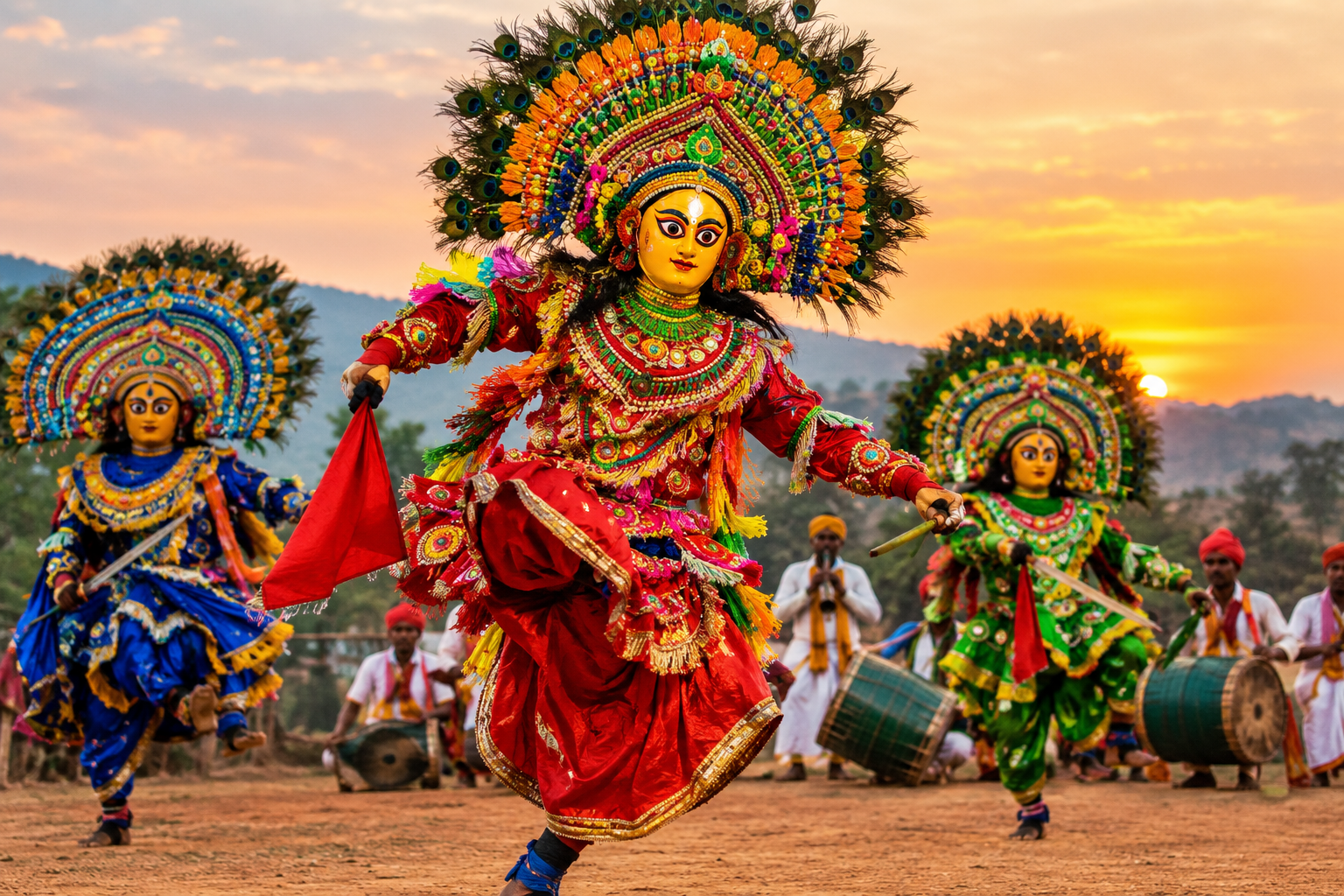
The costumes used in Purulia Chhau are colorful, elaborate, and visually impressive. Different characters wear different costumes depending on their role in the performance.
Gods and heroes may wear brightly decorated clothing and elaborate headgear, while demons often wear dramatic masks and powerful costumes. Animal characters are also represented through specially designed masks and costumes.
Feathers, ornaments, colorful fabrics, decorative jewelry, and traditional accessories are commonly used. The combination of masks and costumes creates a grand theatrical appearance.
Music and Traditional Instruments
Music plays a central role in Purulia Chhau performances. The powerful rhythm of traditional instruments guides the dancers and creates excitement during the performance.
Important instruments include:
Dhol
The dhol is a traditional drum that produces strong rhythmic beats. It is one of the most important instruments used in Chhau performances.
Dhamsa
The dhamsa is a large drum that produces deep and powerful sounds. It creates a dramatic atmosphere during the dance.
Shehnai
The shehnai is a wind instrument that adds melody and emotional expression to the performance.
The musicians and dancers work together closely. The changing rhythm of the music often represents different moods, characters, and dramatic situations.
Chaitra Parva and Festivals
Purulia Chhau is closely associated with Chaitra Parva, an important spring festival celebrated in the region. During this period, villages organize cultural programs and Chhau performances.
The performances may continue late into the night, attracting large numbers of people from nearby villages and towns. The festival provides an opportunity for communities to come together and celebrate their cultural traditions.
Today, Purulia Chhau is also performed at cultural festivals, national events, international programs, and tourism festivals.
Purulia Chhau and Cultural Identity
Purulia Chhau is more than just a dance. It represents the history, traditions, creativity, and identity of the people of Purulia.
The dance brings together several traditional art forms, including:
- Dance
- Music
- Mask-making
- Costume design
- Storytelling
- Martial movements
- Traditional craftsmanship
Many families have been associated with Chhau dance and mask-making for generations. The knowledge and skills are often passed from experienced artists to younger performers.
The Art of Chhau Mask-Making
Chhau mask-making is itself an important traditional art. Skilled artisans create masks through a careful process involving several stages.
The process generally includes preparing the basic structure, shaping the face, adding decorative details, drying the mask, painting it, and finally decorating it with ornaments and colorful materials.
Each mask requires artistic skill and patience. The expressions, colors, and decorations are designed according to the character being represented.
The masks of gods and heroes are often colorful and attractive, while demon masks may have dramatic facial features, large eyes, teeth, and bold colors.
Today, Chhau masks are also appreciated as works of art and are used for cultural decoration and exhibitions.
Importance of Purulia Chhau in Tourism
Purulia Chhau has become an important attraction for cultural tourism in West Bengal. Visitors come to Purulia to experience traditional performances, visit mask-making villages, and learn about local culture.
The beautiful landscape of the Purulia region, combined with its rich folk traditions, makes it an attractive destination for cultural travelers.
Charida village has become particularly well known for its Chhau masks. Visitors can observe artisans creating masks and purchase traditional handicrafts directly from local artists.
Cultural tourism helps create opportunities for dancers, musicians, artisans, and local communities.
Challenges Facing the Tradition
Although Purulia Chhau remains popular, traditional artists face several challenges. Maintaining costumes, masks, instruments, and performance groups can be expensive. Many artists also depend on seasonal performances and may have limited financial support.
Another challenge is encouraging younger generations to continue traditional practices. Training new dancers and preserving traditional mask-making skills are important for the future of the art form.
However, increased cultural awareness, tourism, festivals, educational programs, and government support have helped bring greater recognition to Purulia Chhau.
Preservation and Promotion
Preserving Purulia Chhau requires support for dancers, musicians, and traditional artisans. Cultural organizations, educational institutions, government programs, and local communities can all contribute to protecting this important heritage.
Some important steps for preservation include:
- Supporting traditional artists
- Encouraging young people to learn Chhau
- Promoting Chhau performances nationally and internationally
- Preserving traditional mask-making techniques
- Developing cultural tourism responsibly
- Organizing workshops and training programs
- Documenting performances and traditional knowledge
Digital media and social platforms also provide new opportunities for introducing Purulia Chhau to younger audiences around the world.
Conclusion
Purulia Chhau is one of India’s most remarkable folk dance traditions. Its combination of energetic dance, colorful masks, dramatic costumes, powerful music, mythology, and traditional craftsmanship makes it a unique cultural treasure.
The dance reflects the creativity and cultural richness of the people of Purulia. From the skilled dancers who bring ancient stories to life to the artisans who carefully create magnificent masks, every aspect of Purulia Chhau represents generations of knowledge and artistic dedication.
As the world becomes increasingly connected, traditional art forms like Purulia Chhau remind us of the importance of preserving cultural heritage. By supporting artists, encouraging younger generations, and promoting traditional arts, we can ensure that the powerful rhythms, colorful masks, and dramatic movements of Purulia Chhau continue to inspire audiences for generations to come.
Gambhir Singh Mura was one of the greatest and most influential artists of Purulia Chhau dance. He played a major role in popularizing this traditional dance form in India and internationally. He is widely remembered as a legendary Chhau dancer, guru, and cultural icon of Purulia.
Short Biography
Name: Gambhir Singh Mura
Known For: Purulia Chhau Dance
Birthplace: Pitikiri Bamni, Purulia, West Bengal
Father: Jipa Singh Mura
Major Award: Padma Shri, 1981
Other Recognition: Sangeet Natak Akademi Award
Contribution: Popularized Purulia Chhau nationally and internationally
Legacy: Legendary Guru and pioneer of modern Purulia Chhau
Gambhir Singh Mura Awarded Padma Shri in 1981 and Sangeet Natak Academi award for purulia chhau in 1982.